
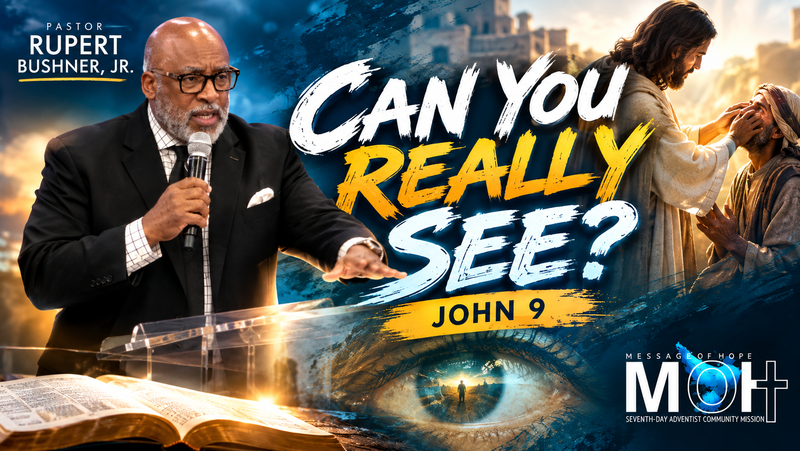
In this message, the speaker explores the story of Jesus healing the man who was born blind to challenge believers to examine whether they truly see and understand spiritual truth. The sermon emphasizes that God can use our circumstances to reveal His love and power, that obedience requires faith even when we do not understand the process, and that personal experience with Jesus can transform our lives. It also warns against spiritual blindness, judgment, and allowing the actions of imperfect people to turn us away from God. Believers are encouraged to seek truth through God’s Word, remain open to correction, and build trusted relationships that help reveal their blind spots.
God Can Use Our Circumstances to Reveal His Power. The man was not born blind because of his own sins or those of his parents. Jesus explained that his condition would provide an opportunity for God’s work to be revealed. The speaker reminds believers that although God may not have caused their pain or hardship, He can use their circumstances to demonstrate His love and power.
Obedience Requires Trusting God’s Instructions. Jesus placed mud on the blind man’s eyes and told him to wash in the Pool of Siloam. The man followed the instruction before he could see the outcome, and he received his sight. Believers are challenged to obey God even when His methods differ from their expectations or they do not fully understand His plan.
A Personal Encounter With Jesus Changes Your Life. After receiving his sight, the man openly testified about what Jesus had done for him. Although he could not answer every question about Jesus, he knew that he had been blind and could now see. The sermon encourages believers to share their testimonies and recognize the transforming power of God’s grace.
Spiritual Blindness Can Keep People From Accepting Truth. The Pharisees had evidence of the man’s healing, yet their assumptions and rigid expectations prevented them from recognizing God’s work through Jesus. The speaker warns that people can become so convinced of their own understanding that they reject truth even when evidence is before them.
Do Not Let Other People’s Actions Turn You Away From Jesus. The religious leaders rejected and expelled the man because his experience challenged their beliefs. Jesus later sought him out. The sermon reminds listeners not to judge Christ by the mistakes or mistreatment of people in the church. People may fail us, but we should continue seeking a relationship with Jesus.
Look Beyond First Impressions and Incomplete Information. Through examples of images that can be interpreted in different ways, the speaker illustrates how people can see the same thing differently. Believers should avoid rushing to judgment or making important decisions without sufficient understanding. Our perspective must be tested against God’s Word rather than relying solely on other people’s opinions or our own assumptions.
Be Willing to Examine Yourself and Receive Feedback. The sermon calls listeners to recognize that everyone has blind spots and areas of life they may not fully understand. It encourages honest self-examination and finding trustworthy people who can offer wise, confidential feedback. Growth requires humility, a willingness to face hidden struggles, and a desire to understand ourselves more clearly.
-
John 9:1–7 — Jesus heals the man born blind, demonstrating that God can reveal His work through a person’s circumstances.
-
John 9:18–34 — The Pharisees question the healing and reject the man’s testimony.
-
John 9:35–41 — Jesus finds the healed man, invites him to believe, and teaches about spiritual blindness.
-
Matthew 4:4 — The importance of living by every word that comes from God.
-
Revelation 12:11 — The sermon refers to overcoming through the blood of the Lamb and personal testimony.
